


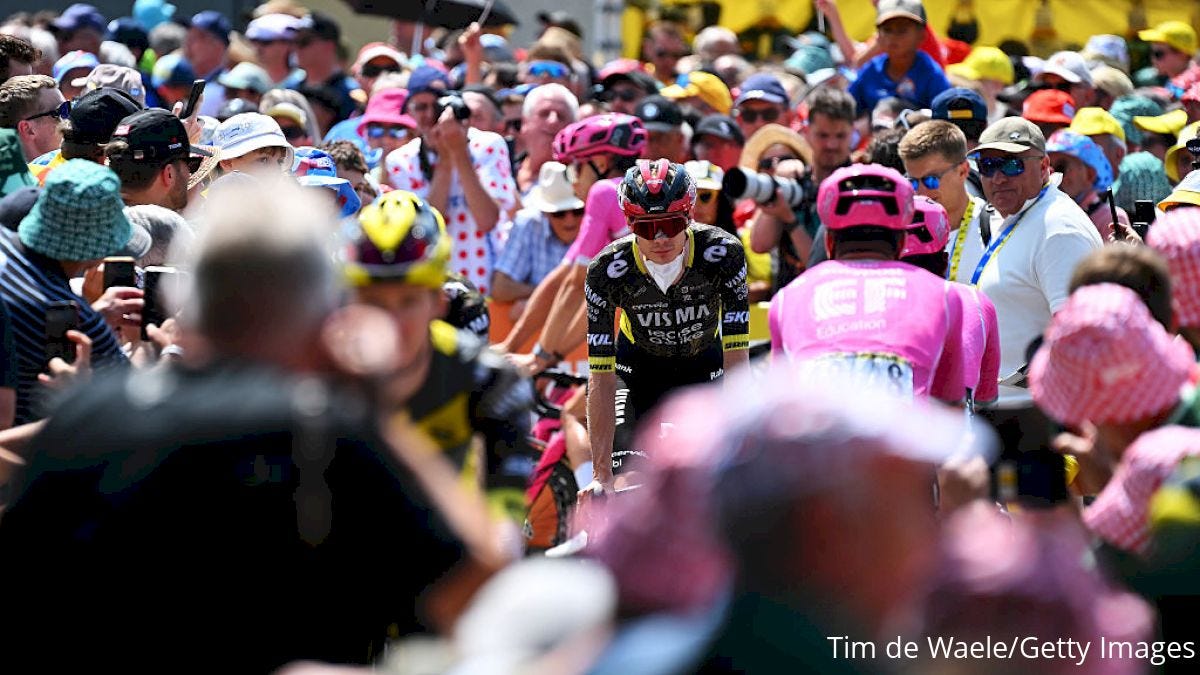
The Tour de France is a race where the difference between victory and defeat is often measured in seconds. But sometimes, the outcome has nothing to do with fitness, tactics, or climbing power. Sometimes, everything changes because of a single mistake in a corner.
That’s exactly what happened during Stage 15 of the 2026 Tour de France.
With around 30 kilometers remaining before the finish, on the approach to the final climb of Plateau de Solaison, Jonas Vingegaard—two-time Tour de France champion and Tadej Pogačar’s biggest rival—lost control of his bike while exiting a roundabout. Compared to many crashes we see in professional cycling, it didn’t initially look particularly dramatic. Yet the consequences were enormous: a fractured collarbone, immediate withdrawal from the race, and surgery scheduled just days later.
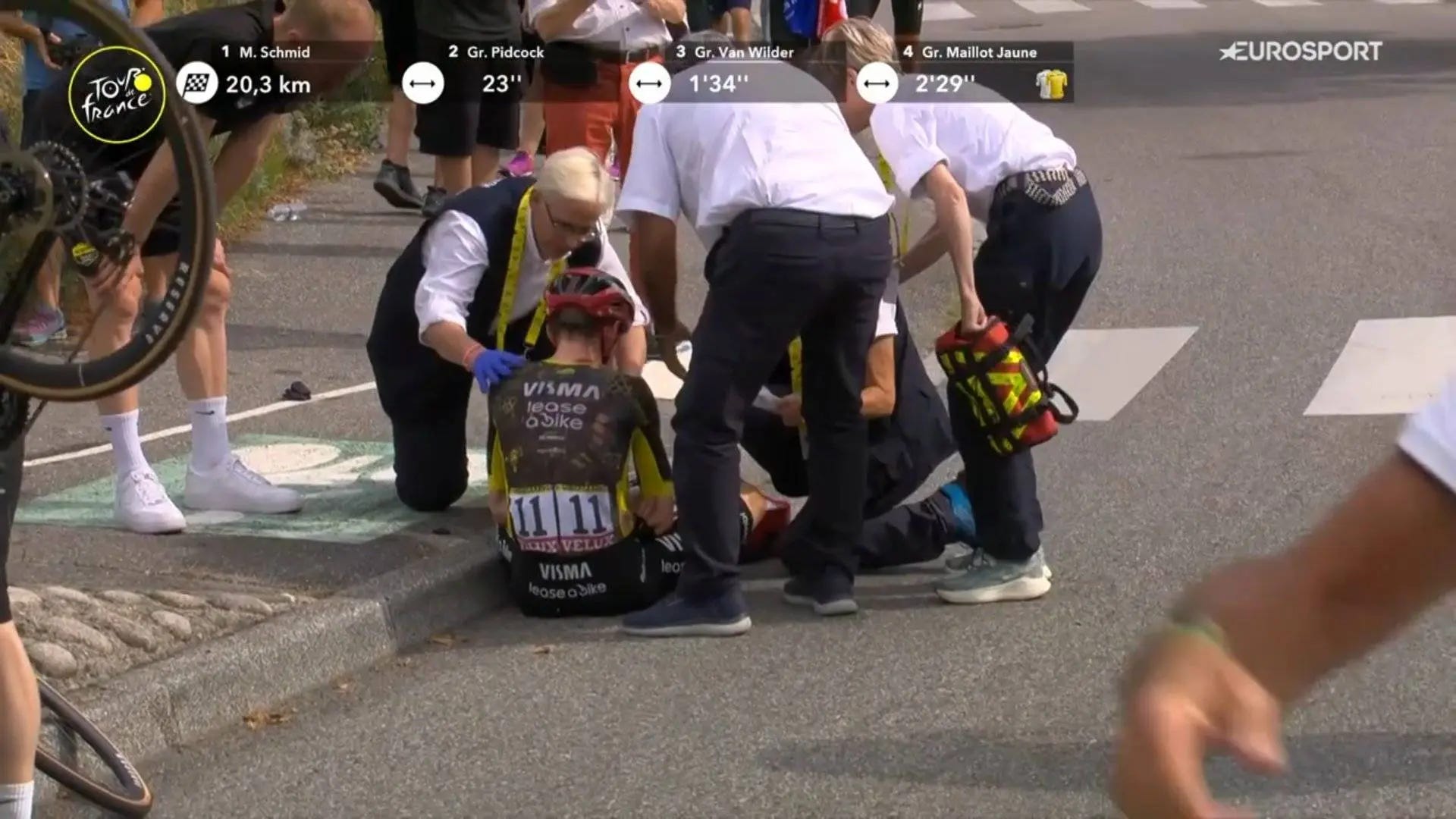
For cycling fans, it was one of the defining moments of this year’s Tour. For the race itself, it completely changed the battle for the yellow jersey. And for me, it became an opportunity to reflect on how incredibly thin the line is between total control and pure chance.
A Few Seconds That Changed the General Classification
Before the crash, Vingegaard sat second overall and remained the only rider with a realistic chance of challenging Pogačar in the Alps. Visma–Lease a Bike had spent months preparing for the decisive week of the Tour, where Grand Tours are traditionally won or lost.
Then, within seconds, everything changed.
Instead of witnessing another epic duel between two of the greatest stage racers of their generation, the fight for overall victory effectively ended. From that point onward, the most compelling battle was no longer for first place, but for the remaining podium positions.
Professional cycling remains one of the most unpredictable sports in the world.
You can prepare perfectly. You can follow the best training program ever designed. You can calculate your nutrition down to the last gram of carbohydrates. Yet no amount of preparation can eliminate uncertainty.
The Crash Didn’t Happen on a Mountain Descent
Perhaps the most surprising part of the incident was where it occurred. It wasn’t on a technical alpine descent. It wasn’t during a rain-soaked downhill. It wasn’t in a chaotic bunch sprint.
According to both Vingegaard and his team, he simply entered a roundabout carrying too much speed. The front wheel lost grip, the bike slid out from underneath him, and within an instant he was on the ground. Later, the Danish rider openly admitted that he had misjudged the corner.
From an engineering perspective, this kind of accident feels strangely familiar. Most major failures don’t happen because a single component catastrophically breaks. They happen because several small factors align at exactly the wrong moment. A little too much speed. A slightly imperfect racing line. Marginally reduced grip. A fraction of a second slower reaction time. Each factor, considered individually, seems insignificant. Together, they create a situation from which recovery becomes impossible.
A Midnight Doping Control: Coincidence or Contributing Factor?
Another topic emerged after the stage.
The night before the crash, Vingegaard had been woken around two o’clock in the morning for an out-of-competition anti-doping control conducted by the International Testing Agency (ITA). He later acknowledged that the interrupted sleep might have affected him, although he refused to use it as an excuse.
Interestingly, Tadej Pogačar expressed a similar opinion, suggesting that sleep disruption could theoretically reduce concentration.
Whether there was any direct connection is impossible to prove.
Still, the discussion itself is fascinating.
Modern professional cycling demands absolute concentration every second of every race. Even a slight reduction in focus can have serious consequences at speeds exceeding 50 km/h.
Cycling Keeps Getting Faster
Looking at recent editions of the Tour de France, another trend becomes impossible to ignore. The race keeps getting faster. Riders are lighter. Bikes are stiffer, more aerodynamic, and more efficient than ever before. Modern tires generate astonishing levels of grip. Power meters, aerodynamic modeling, and advanced analytics allow teams to optimize every aspect of performance. Technology should make the sport safer. Yet it also makes it faster.
Physics reminds us of a simple truth: kinetic energy increases with the square of velocity. That means even a modest increase in average speed produces a much larger increase in impact energy during a crash. No bicycle helmet, no matter how advanced, can repeal the laws of mechanics.
Why Risk Can Never Be Eliminated
Every major crash inevitably triggers the same questions.
Why didn’t the organizers redesign the course?
Why wasn’t the dangerous section protected?
Why weren’t the riders more cautious?
The reality is more complicated. Professional cycling is a competition performed at the absolute limit of human performance. Risk cannot be completely removed without fundamentally changing the nature of the sport itself. Helmets can become safer. Medical protocols can improve. Course design can continue evolving. But crashes will never disappear entirely. That is why modern cycling increasingly focuses not only on preventing accidents but also on reducing the severity of their consequences.
Modern Helmets Really Do Save Lives
This crash also reminded many people of a common misunderstanding. When a rider suffers a concussion or breaks a collarbone despite wearing a helmet, some assume the helmet somehow failed.
The opposite is true. A bicycle helmet has never promised to eliminate injuries. Its purpose is to absorb impact energy and dramatically reduce the likelihood of catastrophic head trauma. That is why virtually every WorldTour team now uses helmets incorporating rotational impact protection technologies such as MIPS or similar systems. These helmets don’t make riders invincible. But they significantly improve their chances of walking away from crashes that might otherwise have been fatal.
What This Crash Says About Vingegaard
One thing I’ve always admired about Jonas Vingegaard is his composure. After the crash, he didn’t blame the organizers. He didn’t criticize the course. He didn’t complain about the anti-doping control. Instead, in his first interview after leaving the race, he simply said:
Perhaps that’s what separates truly great champions from everyone else. They understand that defeat is part of the profession. Sometimes it comes because someone else was stronger. Sometimes it comes because of a single misjudged corner.
Final Thoughts
As an engineer, I’m naturally inclined to search for root causes. But sometimes the most honest conclusion is that there isn’t just one.
Vingegaard’s crash resulted from a combination of speed, road design, human judgment, and the unavoidable uncertainty that defines professional cycling.
Perhaps that’s exactly why the Tour de France continues to fascinate millions of people. It doesn’t simply showcase the limits of human endurance. It reminds us how fragile success can be. Months of preparation. Thousands of kilometers of training. Years spent chasing marginal gains. And sometimes, the outcome of the world’s greatest cycling race changes because of one corner taken just a little too fast.